This Creationtide, we are highlighting the tangible benefits of solar panels and how they can help churches reduce carbon emissions, generate sustainable energy and move towards Net Zero Carbon.
While there are many practical reasons for pursuing Net Zero Carbon, there is also a growing theological imperative. This is explored in the Church of England's recent paper, Hope for All Creation, which sets out a Christian understanding of the environmental challenges facing the world and roots care for creation in the biblical story of creation, redemption and renewal.
St Mary of Bethany, Woking
Earlier this year, St Mary of Bethany, Woking installed solar panels thanks to a £4,000 grant from Marshall's Charity, which supports church restoration projects, and a further £4,000 grant via the Diocese of Guildford.
The church has recently received its first energy bill since the installation, revealing an impressive 86% reduction in electricity consumption. Gas usage has also fallen, as the solar panels now provide hot water heating.
The Vicar, the Revd Mark Wallace, said:
"Installing the panels has helped us clearly demonstrate our commitment to being an Eco Church and the progress we have made in improving our building despite the constraints of being a listed building in a conservation area. Reducing our running costs will enable us to spend more money on mission and ministry, including our plans to recruit a youth worker."
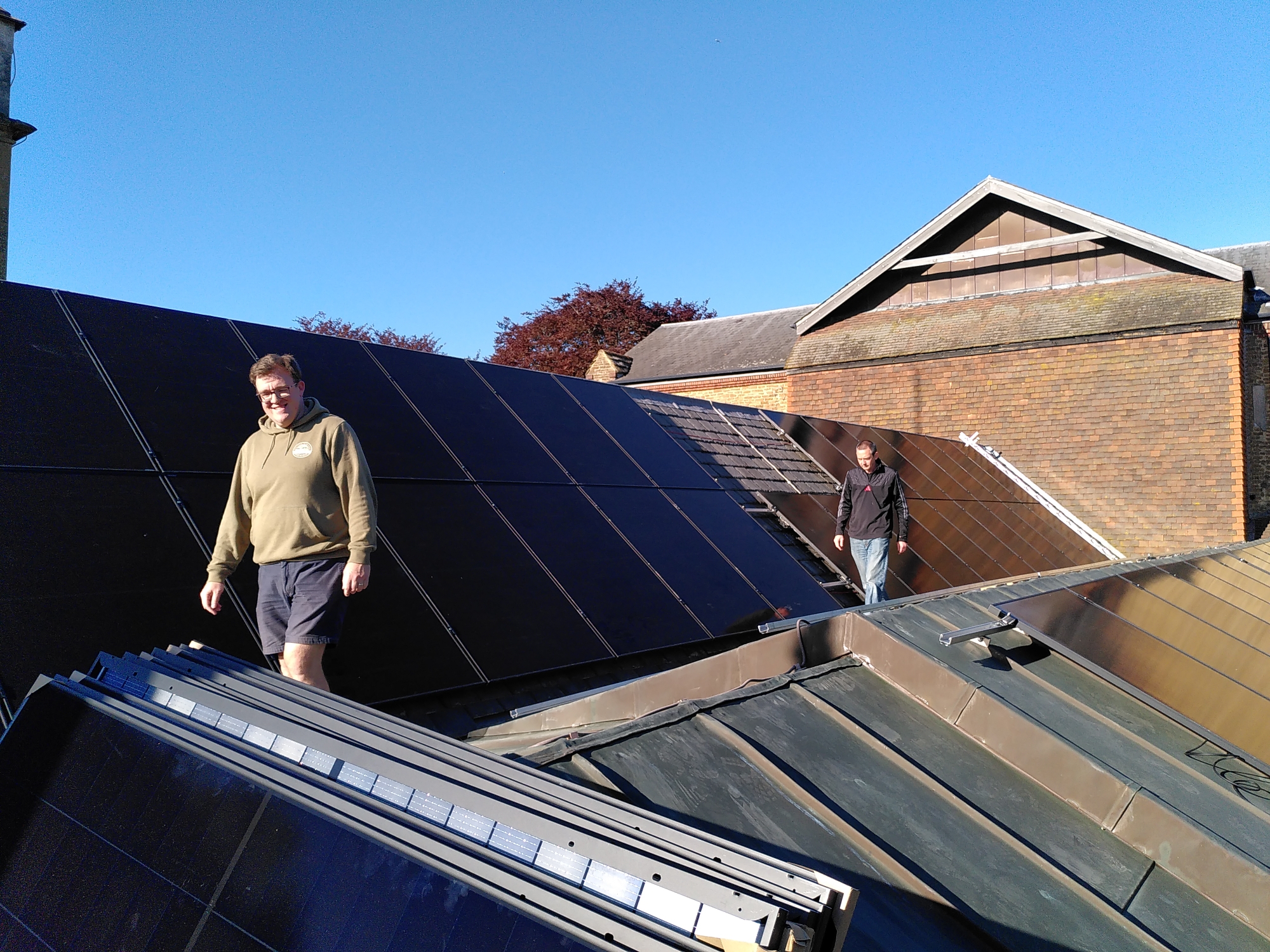
St Martin's Church, Epsom
Further north in the Diocese, St Martin's Church, Epsom began exploring solar panels after speaking to another local church that had successfully installed them.
Like St Mary of Bethany, St Martin's is a listed building situated within a conservation area. However, because of the Church of England's support for environmentally sustainable initiatives, the faculty application process proved straightforward.
Funding from the local council enabled the church to install roof-mounted solar panels, along with a dedicated area for inverters and battery storage, helping to reduce fire risk.
To celebrate the project, Bishop Christopher visited the church this summer to bless the panels during a special service.
The impact has already been significant. Since May, solar power has supplied the church's AV system and organ during services, while stored energy in the batteries has powered equipment for evening choir rehearsals.
Today, the panels provide around 80% of the church's energy needs. The church is now exploring ways to extend their use so that the church offices and hall can also be powered by solar-generated electricity during the day.
St Andrew's, Goldsworth Park
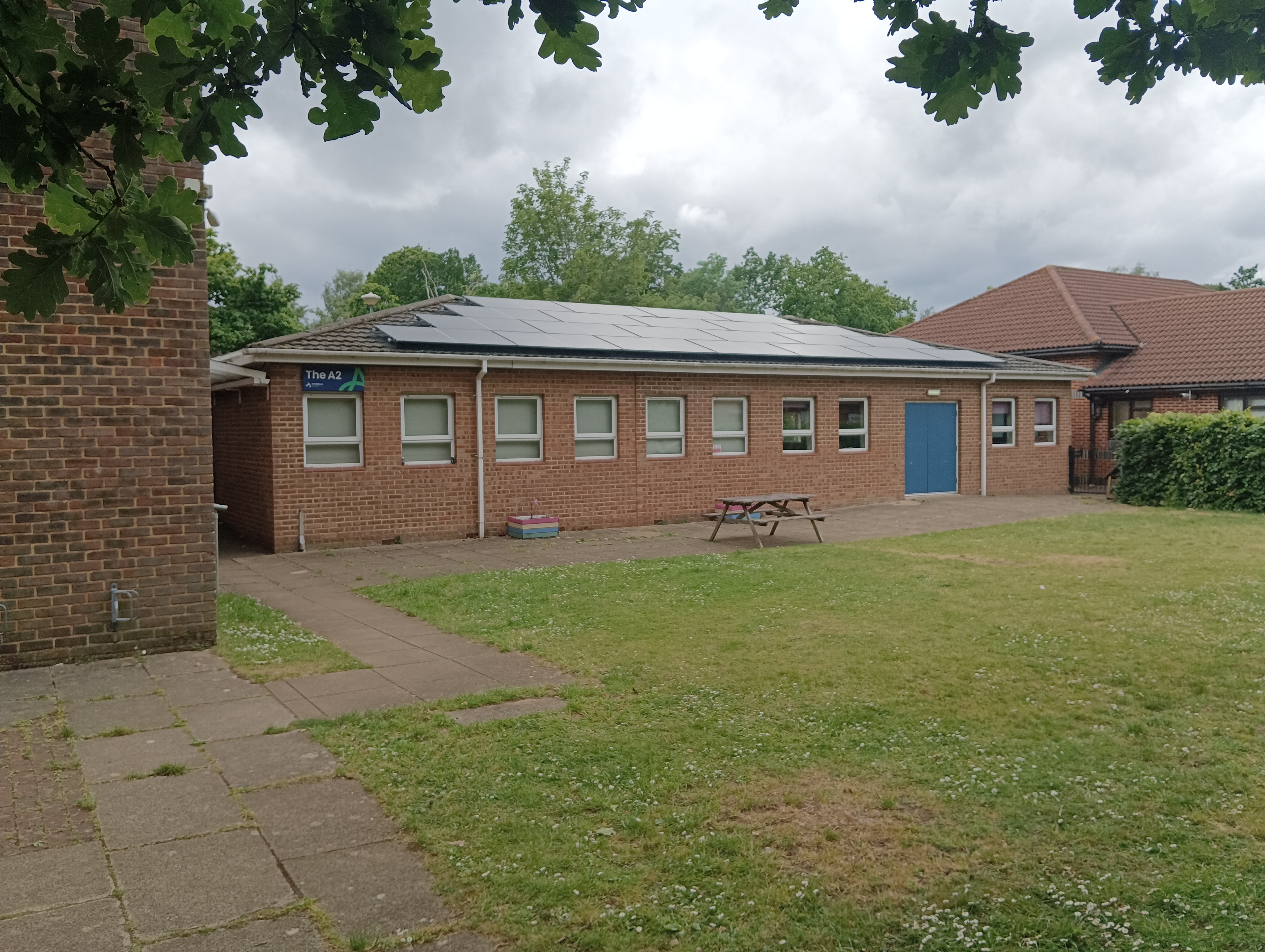
St Andrew's, Goldsworth Park has also seen a noticeable reduction in electricity consumption since installing solar panels.
The panels were fitted to the church's community centre, where the larger, flatter roof provided a more practical location than the main church building, avoiding some of the complexities associated with a sloping roof.
Neil Cheetham, a PCC member, advised:
"It's an advantage to have a number of solar panel quotes ready so that when grant funding becomes available, you can act quickly. It's also worth bearing in mind that planning permission is likely to be needed, so it's helpful to investigate that process in advance."
Ruxley Church
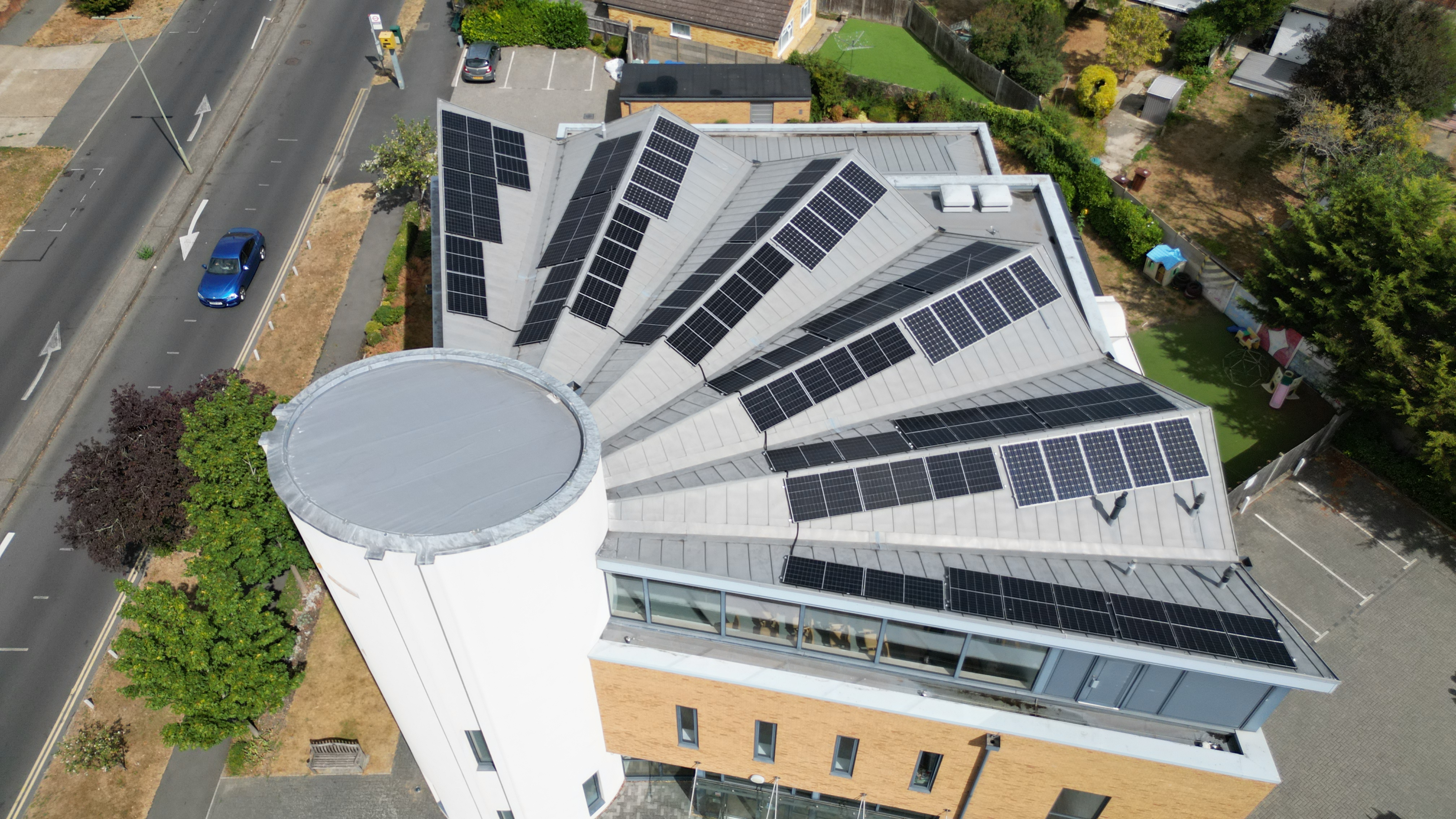
Ruxley, the newest parish in the Diocese, was built in 2013. A small number of solar panels were included in the original construction, but this summer the church completed the project by installing a further 60 panels across much of its fan-shaped roof.
The church currently receives around £1,000 each year from the electricity it generates.
The £35,000 project was funded through a combination of diocesan support via the Church of England's Quick Wins Fund, legacy gifts and generous donations from the congregation.
Chris Meineck, the church treasurer and a member of the eco team, said:
"When considering solar panels, it's worth taking time to fully research potential suppliers and find out whether they have experience of working on church buildings, which can be a real advantage.
"Communication is also key to a successful project. We were clear with the congregation about why we wanted solar panels and how they fitted into our wider commitment to caring for creation and reducing our carbon footprint. We kept people updated throughout the project, and they responded with much-needed financial support."
As these four churches demonstrate, solar panels can deliver significant environmental and financial benefits. Whether installed on historic listed buildings or modern church roofs, they are helping congregations reduce energy costs, lower carbon emissions and play their part in caring for God's creation.
For advice contact Alison.Moulden@cofeguildford.org.uk or to access resources and information on funding options, visit our environment and net zero pages